
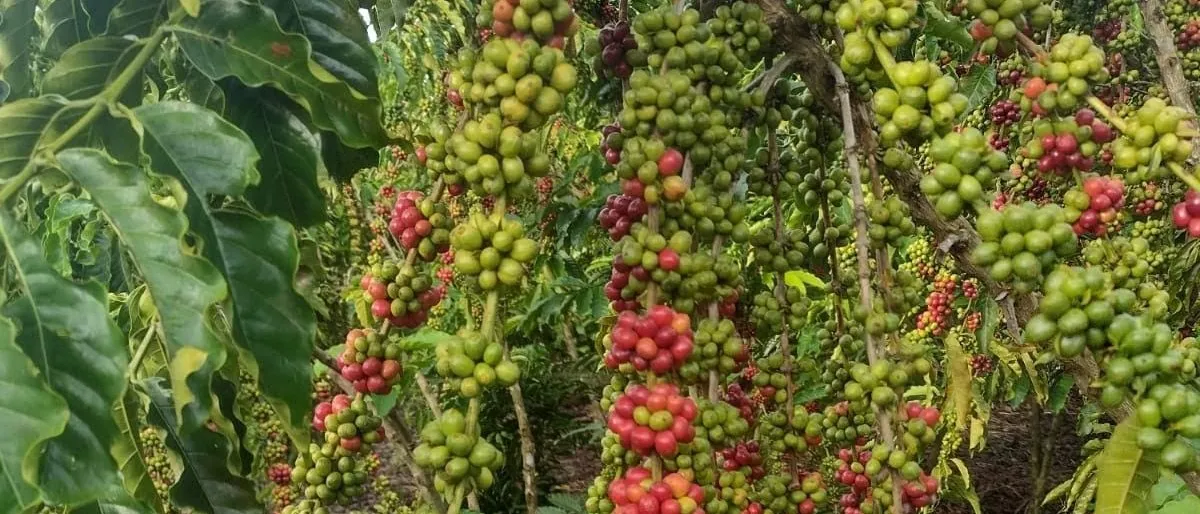
Origin
Amazonian Robusta (Conilon) from Colniza, Mato Grosso
Robusta (Conilon) coffee grown by member families of a producer cooperative in Taquaruçu do Norte, Colniza, in the Amazon region of northwestern Mato Grosso. This page explains where the coffee comes from, how it is grown, and how a buyer can request a sample.
At a glance
- Location
- Taquaruçu do Norte, Colniza, Mato Grosso, Brazil
- Species
- Coffea canephora (Robusta / Conilon)
- Members
- 23 family producers
- Municipalities served
- 8
- Founded
- 2024
- Products
- Robusta (Conilon) coffee, cassava flour, banana chips
Where the coffee is grown
The cooperative is based in the village of Taquaruçu do Norte, in the municipality of Colniza, in the far northwest of Mato Grosso, Brazil. Colniza lies in the Amazon region, near the state borders with Amazonas and Rondônia.
Northern Mato Grosso is often described as a transition zone between the Cerrado savanna and the Amazon. It is a region of steady heat, rainfall concentrated in the wet season and deep soils, conditions in which Coffea canephora grows vigorously. That is why the coffee grown here is Robusta (Conilon), not Arabica.
When we call our coffee "Amazonian Robusta", it is a plain description of where it grows. It is not a geographic indication or a denomination of origin, and the cooperative does not claim one. For background on Conilon in this part of Brazil, see our article on Conilon coffee in the Amazon of Mato Grosso.
The membership is spread across 8 municipalities in the cooperative's operating area. Coffee from all of them is brought to a shared structure where it is received, processed, stored and marketed by the cooperative.
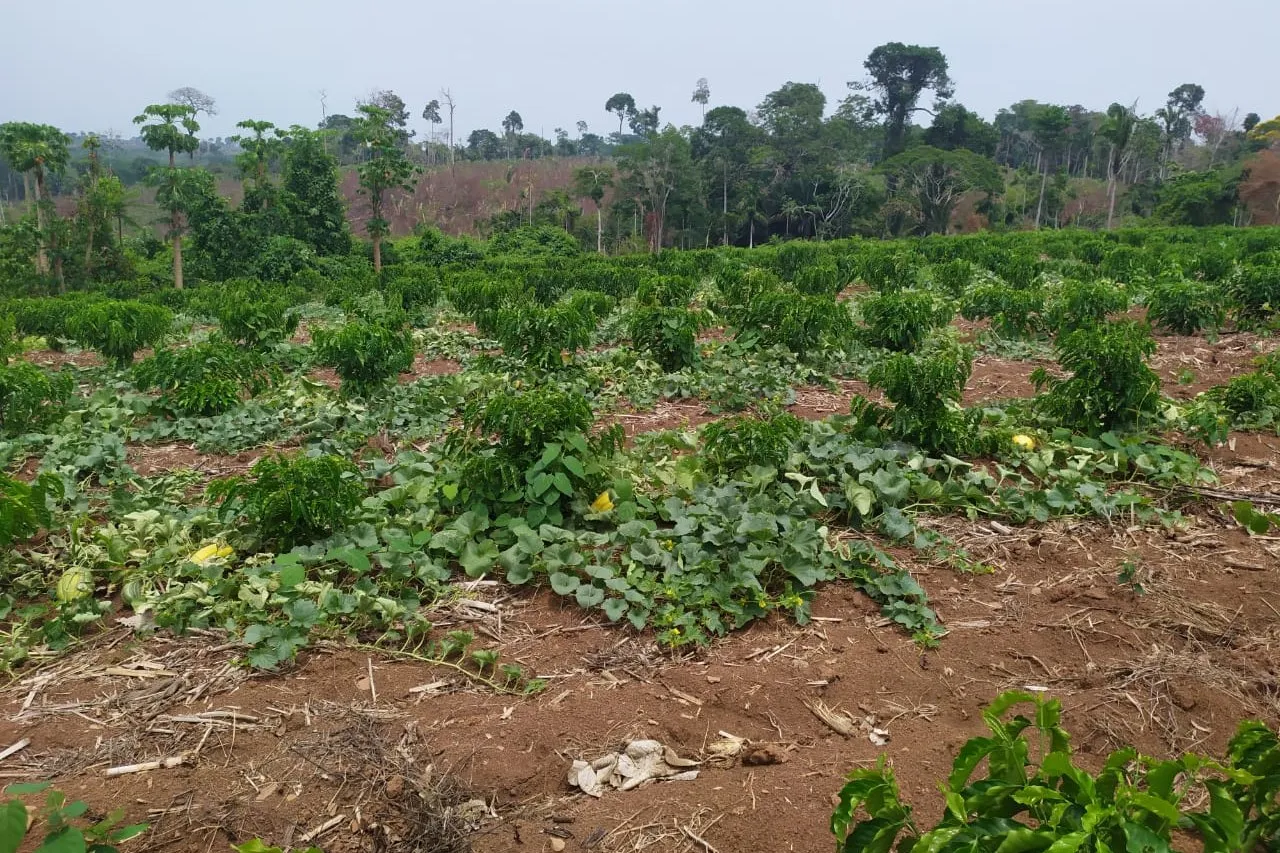
Coffee grown alongside forest
Our coffee is grown by member families on family properties. On these properties the coffee field shares space with forest and with other crops, rather than being planted as one continuous monoculture. This is what we mean by agroforestry: coffee as one part of a working family farm in a forested landscape.
Encouraging environmental preservation and reforestation is one of the cooperative's statutory objectives, written into its Bylaws, including the production and marketing of seeds and seedlings. In practice, the cooperative runs a seedling nursery in Taquaruçu do Norte. On 30 May 2026 it held its 2nd Field Day at the nursery, together with SENAR-MT, EMPAER-MT, the Colniza Rural Union and IFMT.
Field work is supported by technical partners, including EMPAER-MT, SEAF, Sebrae, SEMA, the Colniza Rural Union, SENAR-MT and IFMT. The cooperative also provides agricultural technical assistance to its own members.
The cooperative holds no certifications. We do not claim organic, Fairtrade, Rainforest Alliance, 4C or any other seal, and nothing on this page should be read as one.
- Coffee shares space with forest and other crops
- Seedling nursery in Taquaruçu do Norte
- Reforestation is a statutory objective
- No certifications claimed
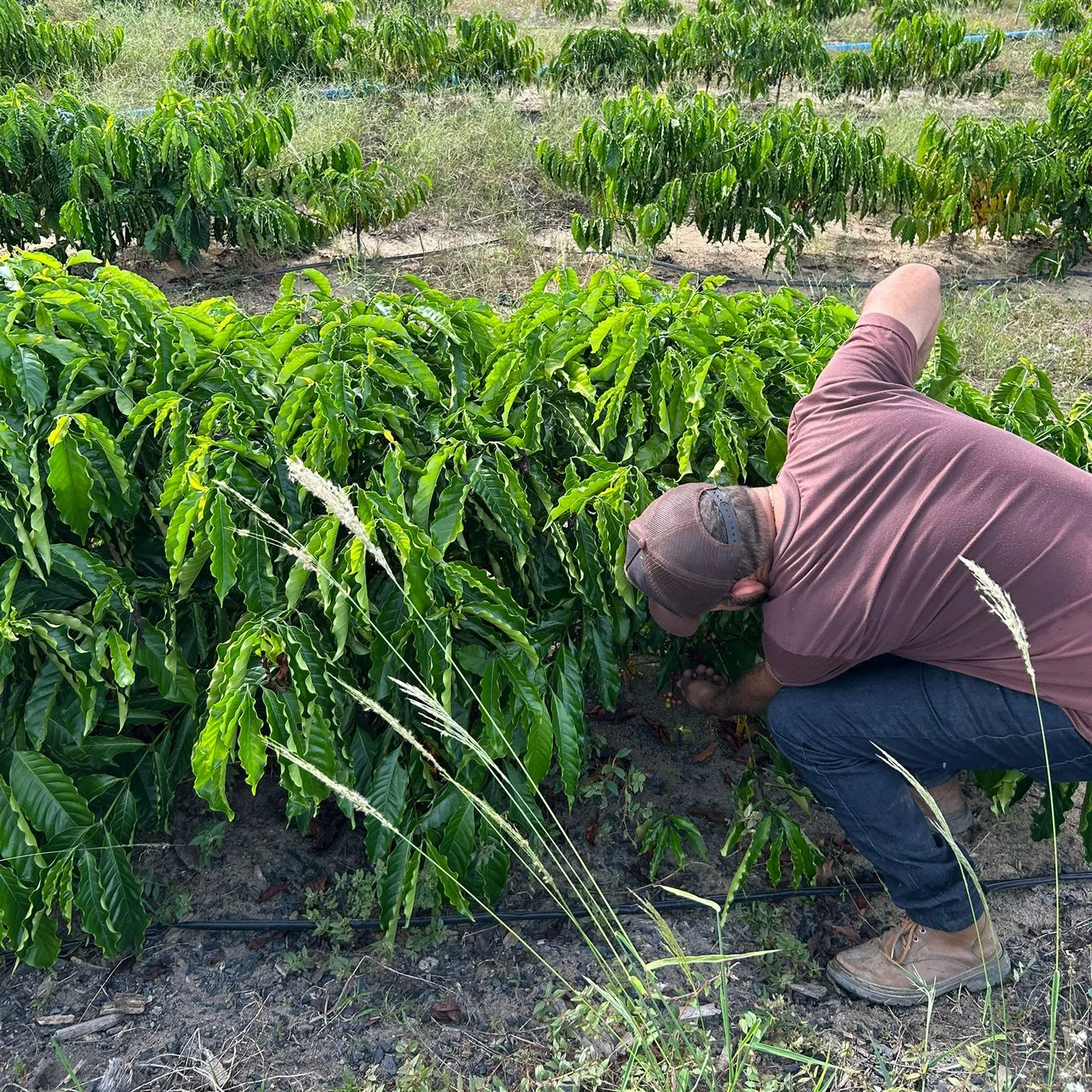
A cooperative of family producers
Carvalho Beans is the brand of COOPERANTE - Cooperativa Carvalho Beans, a non-profit cooperative founded in 2024 under Brazilian Law 5.764/71. It has 23 members, all rural producers who farm land they own, lease or work in partnership within the operating area.
Governance follows the cooperative principle of one member, one vote. Every member has the same vote in the General Assembly, regardless of the size of their land or the volume of coffee they deliver.
There are no investor shareholders. Sales proceeds return to the membership and to the cooperative's statutory funds: 5% of results go to FATES, the technical, educational and social assistance fund, and 45% go to the Reserve Fund. For a buyer, that means the price paid for the coffee supports the families who grew it and the shared structure that processes it.
Selling together also lets the cooperative offer consolidated volume that no single smallholder in the region could supply alone. Producers in the region who want to take part can read how to become a member of the cooperative.
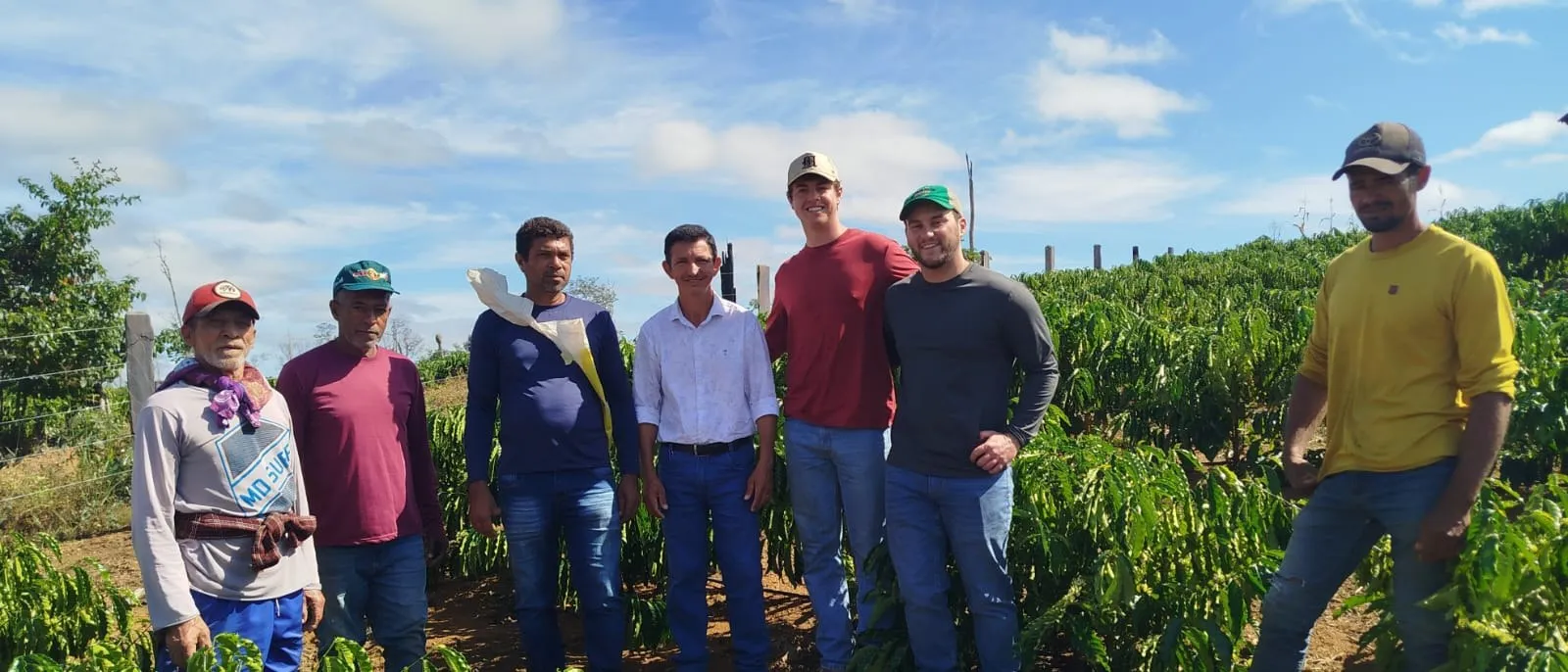
Identified origin and a single counterparty
Buying from the cooperative gives you identified origin and a single commercial counterparty. Production is received and identified by property of origin inside the cooperative's receiving structure, so every bag can be traced to a member property.
At the same time, you do not deal with dozens of individual farms. Contract, invoicing and logistics are handled with one legal entity: the cooperative.
Coffee passes through five stages inside the cooperative's structure. Grading and packing in a shared facility is what allows the cooperative to standardise lots across the membership. Full product details are on the Robusta (Conilon) coffee page.
- Harvest: picking on member properties
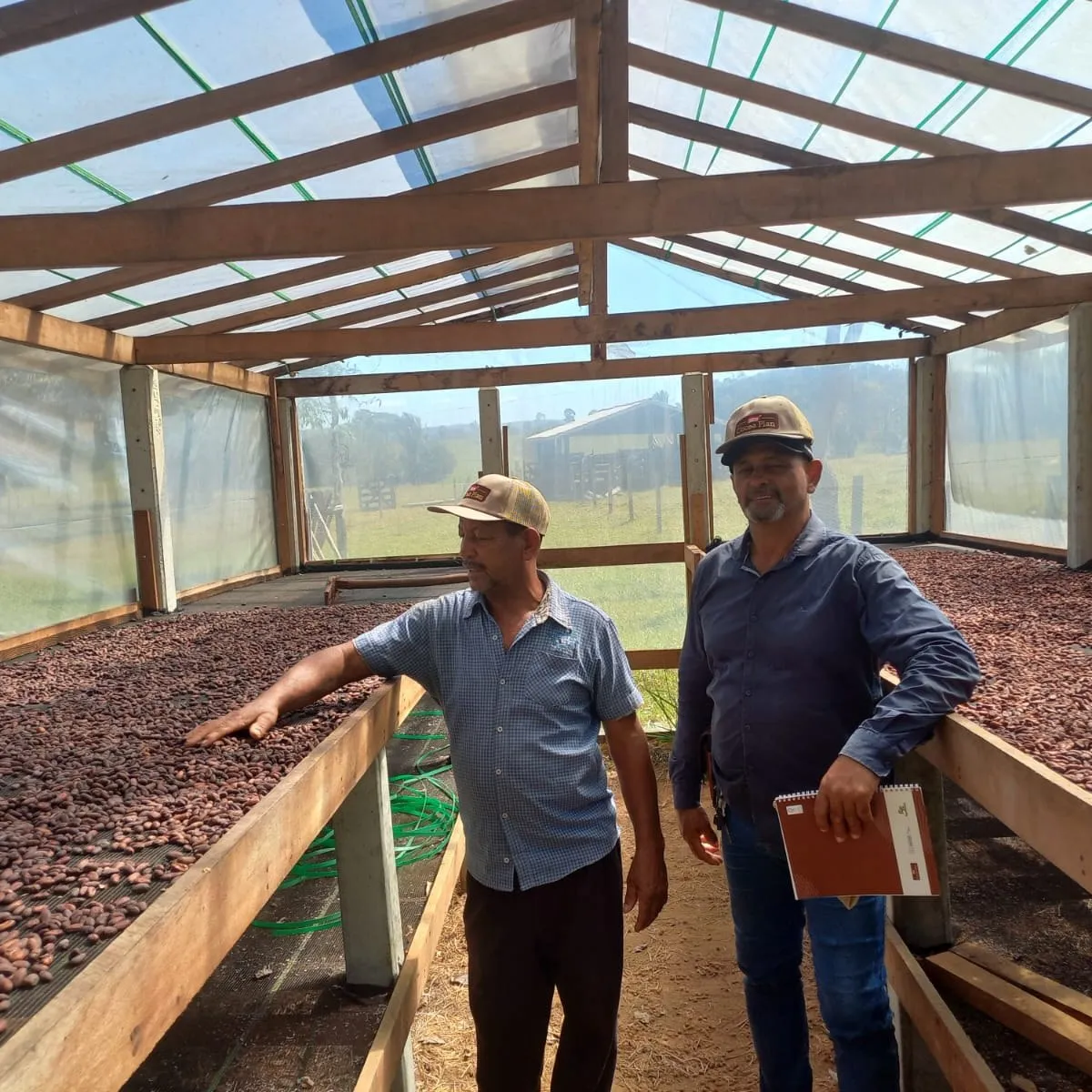
- Drying: controlled drying to target moisture
- Hulling: hulling and cleaning of the bean
- Grading: separation by type, screen size and cup quality
- Packing: bagging, origin identification and storage
How to request a sample
The simplest way to judge a coffee is to cup it. To request a sample, use the quote and sample request form, send a WhatsApp message to +1 (978) 398-5263, or email carvalhobeans@gmail.com.
Please tell us the product, the estimated volume and the destination. If you have a timeline or a target profile in mind, include that as well. We reply within 24 hours.
Sample size, shipping method and any cost are agreed case by case, depending on the destination and what you need to evaluate. We do not publish fixed specifications or prices on this site: send us your product, volume and destination and we will reply with terms and a sample offer.
For a step-by-step view of what happens after you write to us, read our sample process, from request to cupping. If you are comparing Robusta for an espresso blend, our article on Robusta vs Arabica in espresso blends covers the general differences.
For international buyers
The cooperative sells to buyers in Brazil and to international buyers. It does not export on its own account. An international buyer purchases from the cooperative and arranges the export, including export registration, customs clearance and freight, through its own exporter, trading company or freight forwarder.
In practice, many importers already work with a Brazilian exporter or forwarder who can handle these steps. The cooperative remains your counterparty for the coffee itself: origin, contract and invoicing.
If you are new to sourcing from Brazil, our guide on how to import Robusta coffee from Brazil explains the general process and the parties involved. When you contact us, tell us the destination country and who will handle the export, and we will reply with terms and a sample offer. You can also see how we work with buyers on the wholesale page.
Request a sample of our Robusta (Conilon)
Tell us the product, volume and destination. We reply within 24 hours with terms and a sample offer.
Are you a rural producer in our region? Find out how to join the cooperative.